
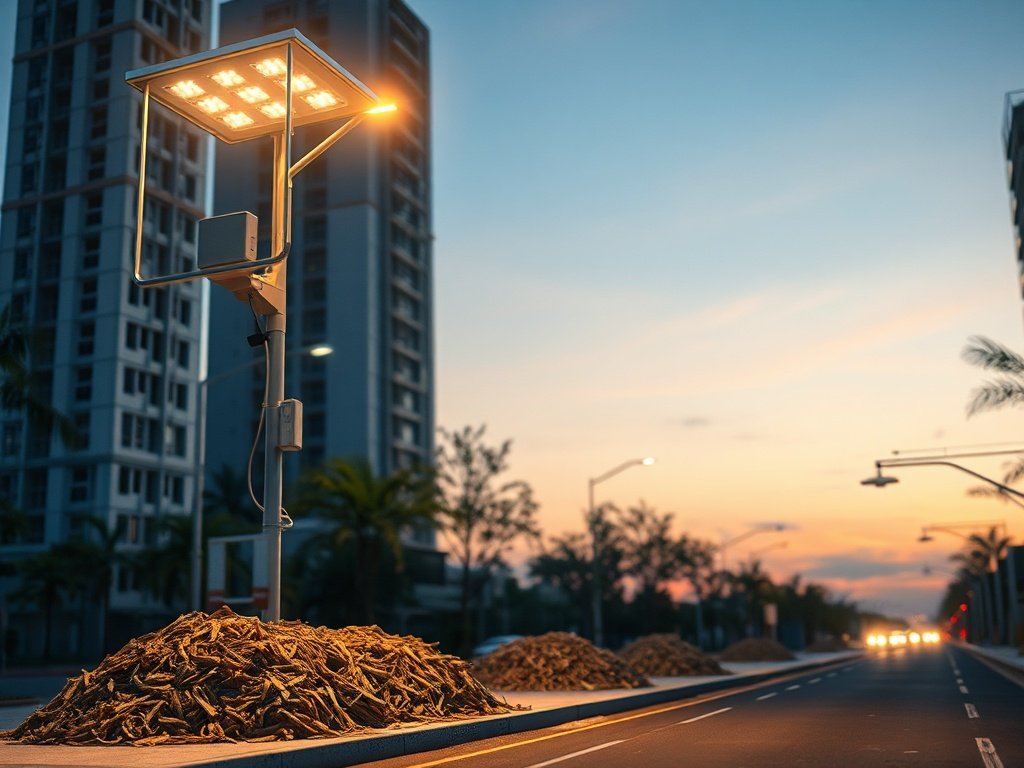
A self cleaning streetlight oil palm waste system is an eco-friendly lighting solution that uses materials derived from oil palm waste to build or support automated streetlight mechanisms capable of cleaning their own panels or light surfaces. This innovation reduces maintenance costs, improves lighting efficiency, and promotes sustainable waste recycling. By converting agricultural waste into smart infrastructure components, cities can reduce environmental impact while improving urban lighting reliability.
Sustainable urban infrastructure is becoming a global priority as cities search for innovative ways to reduce waste and energy consumption. One promising concept is the use of oil palm waste to develop eco-friendly components for automated streetlight systems. These streetlights integrate self-cleaning mechanisms that prevent dust accumulation and maintain consistent illumination without frequent maintenance.
By combining agricultural waste recycling with smart lighting technology, municipalities can lower operational costs, improve environmental sustainability, and extend the lifespan of lighting equipment. This article explores how oil palm waste materials are transformed into useful components, the science behind self-cleaning systems, their environmental benefits, and the future potential of this technology for greener and smarter cities worldwide.
Introduction to Sustainable Street Lighting Innovations
Urban infrastructure is rapidly evolving as cities around the world search for environmentally responsible solutions. Street lighting, one of the most essential elements of city infrastructure, consumes significant resources and requires regular maintenance. Traditional lighting systems often suffer from reduced efficiency due to dust accumulation and environmental exposure. As sustainability becomes a priority, engineers and environmental researchers are exploring innovative materials and technologies that reduce waste while improving functionality.
One emerging idea involves recycling agricultural byproducts, particularly oil palm waste, into useful construction materials. The concept of a self cleaning streetlight oil palm waste solution combines waste recycling with smart design, creating lighting systems that maintain themselves while promoting sustainable resource use.
The Global Challenge of Oil Palm Waste Management
The palm oil industry is one of the largest agricultural sectors in the world, especially in Southeast Asia, Africa, and parts of South America. While palm oil production contributes significantly to global economies, it also generates large quantities of waste materials. These include empty fruit bunches, palm kernel shells, palm fibers, and palm oil mill effluent.
Managing this waste has become a significant environmental challenge. Many regions struggle with disposal methods that often involve burning or dumping agricultural residues. These practices can release greenhouse gases and contribute to pollution. As a result, researchers are looking for innovative ways to convert oil palm waste into useful products such as biofuels, construction materials, and eco-friendly composites.
Transforming waste into functional infrastructure components represents an exciting step toward sustainable development.
Understanding Self-Cleaning Technology in Streetlights
Self-cleaning technology refers to systems designed to remove dust, dirt, or debris automatically without human intervention. In street lighting systems, this technology typically involves mechanisms that clean solar panels, lenses, or protective covers.
Dust accumulation is a major issue for outdoor lighting, especially in urban areas with high pollution or desert environments. Even a thin layer of dust can reduce light output or solar energy absorption significantly. Self-cleaning mechanisms often rely on rotating brushes, water spray systems, or hydrophobic coatings that prevent particles from sticking to surfaces.
By integrating automated cleaning solutions, streetlights can maintain consistent performance while reducing maintenance requirements and operational costs for municipalities.
Role of Agricultural Waste in Sustainable Infrastructure
Agricultural waste has long been considered an underutilized resource. However, modern environmental engineering has revealed that these materials can be transformed into valuable industrial products. Fibers, shells, and organic residues from crops can be processed into composites, bio-plastics, and structural materials.
Oil palm waste, in particular, contains strong natural fibers that can be used to reinforce construction materials. When treated and processed properly, these fibers offer durability, lightweight characteristics, and resistance to certain environmental factors.
Using such materials in urban infrastructure supports circular economy principles. Instead of discarding agricultural residues, industries can repurpose them into functional products that contribute to sustainability and resource efficiency.
Engineering Concepts Behind Smart Streetlight Systems
Smart streetlights represent the next generation of urban lighting technology. Unlike conventional lamps, these systems often include sensors, automated maintenance features, and energy-efficient components. Many smart streetlights are integrated with solar panels, energy storage systems, and remote monitoring capabilities.
Self-maintenance features are especially valuable because they reduce the need for manual inspection and cleaning. In many cities, maintaining thousands of streetlights requires extensive labor and operational budgets.
By designing lighting systems that can clean themselves and incorporate recycled materials, engineers are creating infrastructure solutions that are both environmentally responsible and economically efficient.
Material Processing from Palm Waste to Functional Components
Converting oil palm waste into useful materials involves several stages of processing. The first step is collecting and separating waste materials from palm oil mills. These residues are then cleaned and dried to remove impurities and moisture.
After preparation, fibers and shells are often ground or processed into smaller particles. These materials can be combined with resins or biodegradable binders to create composite materials. Through molding and curing processes, manufacturers can produce durable components suitable for structural applications.Such composites can be used in lighting pole casings, protective covers, or other infrastructure components, helping reduce reliance on traditional plastics or metals.
Also read this: Ponas Robotas: Revolutionizing Modern Robotics With Advanced Technology Today
Environmental Benefits of Waste-Based Lighting Solutions
Using recycled agricultural materials in infrastructure projects offers significant environmental benefits. First, it reduces the volume of waste that would otherwise require disposal or treatment. This directly lowers pollution and landfill pressure.
Second, replacing conventional materials with plant-based composites can reduce carbon emissions associated with manufacturing. Many agricultural waste materials are renewable and biodegradable, making them attractive alternatives to petroleum-based products.
Additionally, incorporating self-cleaning mechanisms improves energy efficiency. Clean lighting surfaces ensure maximum light output and better solar energy absorption in solar-powered systems, ultimately reducing energy consumption.
Cost Efficiency and Maintenance Advantages
Municipal governments often spend large amounts on streetlight maintenance. Cleaning lenses, repairing equipment, and replacing worn components require both manpower and specialized equipment.
Self-cleaning streetlight systems significantly reduce these operational costs. Automated cleaning mechanisms minimize the need for regular manual cleaning visits. Over time, this can save substantial maintenance budgets.
Using recycled materials derived from agricultural waste can also lower manufacturing costs. In many regions where palm oil production is common, raw waste materials are abundant and inexpensive, making them ideal for sustainable infrastructure projects.
Urban Sustainability and Smart City Integration
Smart cities aim to improve urban living conditions through technology, efficiency, and sustainability. Lighting infrastructure plays a key role in this vision because it directly affects safety, energy consumption, and public services.
Integrating waste-based materials into smart lighting systems aligns perfectly with sustainable city initiatives. It supports waste recycling, reduces carbon footprints, and promotes innovation in public infrastructure.
Cities that adopt such technologies can showcase leadership in environmental responsibility while also benefiting from long-term cost savings and improved urban efficiency.
Solar Energy Integration with Self-Cleaning Lighting
Many modern streetlights operate using solar energy. Solar panels mounted on lighting poles collect sunlight during the day and power LED lamps at night. However, dust accumulation can significantly reduce solar panel efficiency.
Self-cleaning technology helps address this challenge by ensuring panels remain free from dust and debris. Maintaining clean surfaces allows solar panels to capture maximum sunlight, improving energy storage and nighttime illumination.
This integration of renewable energy with automated maintenance systems creates highly efficient lighting solutions suitable for both urban and rural environments.
Technological Development of self cleaning streetlight oil palm waste
Researchers and engineers are exploring new ways to combine recycled materials with intelligent infrastructure systems. One example is the development of composite materials derived from oil palm fibers and shells for use in lighting components.
These materials can be incorporated into structural parts such as lamp housings, pole covers, and protective panels. When combined with automated cleaning mechanisms, they create a durable and environmentally friendly solution.
The concept of self cleaning streetlight oil palm waste demonstrates how sustainable materials and modern technology can work together to address urban infrastructure challenges while supporting environmental conservation.
Challenges and Limitations of the Technology
Despite its promising potential, this technology still faces several challenges. Material durability remains a key concern, as agricultural composites must withstand harsh weather conditions over long periods.
Another challenge involves large-scale manufacturing. Developing standardized processes for converting waste materials into infrastructure components requires investment and technical expertise.
Additionally, some municipalities may hesitate to adopt new technologies without long-term performance data. Continued research, pilot projects, and government support will be necessary to demonstrate reliability and encourage widespread adoption.
Research and Innovation Driving Sustainable Lighting
Universities, research institutions, and environmental organizations are actively exploring ways to improve sustainable infrastructure technologies. Many research projects focus on enhancing the strength, durability, and weather resistance of agricultural waste composites.
Scientists are also developing more efficient self-cleaning mechanisms that require minimal energy. Some experimental designs use vibration systems, nano-coatings, or gravity-based cleaning methods to remove dust naturally.
As research progresses, these innovations could transform urban lighting systems into highly sustainable and low-maintenance infrastructure solutions.
Future Potential for Global Smart Cities
As global populations continue to grow, cities must adopt smarter and more sustainable infrastructure systems. Lighting is one of the most visible and essential components of urban environments.
Future streetlight systems may integrate sensors, wireless communication networks, and automated maintenance technologies. Recycled materials from agriculture could become common in manufacturing infrastructure components.
The development of self cleaning streetlight oil palm waste technology highlights how innovative thinking can address multiple environmental challenges simultaneously. By transforming agricultural residues into useful materials, cities can build infrastructure that supports both sustainability and economic efficiency.
Conclusion
Sustainable urban infrastructure is becoming increasingly important as cities face environmental challenges and rising maintenance costs. Innovative solutions that combine waste recycling, renewable energy, and automated technology offer promising alternatives to traditional systems.
Using agricultural byproducts such as oil palm waste in lighting infrastructure demonstrates how industries can transform environmental problems into practical solutions. When combined with automated cleaning mechanisms, these systems maintain optimal performance while reducing operational costs.
The concept of self cleaning streetlight oil palm waste illustrates the power of circular economy principles. By converting waste into valuable resources and integrating smart technology, cities can build greener, smarter, and more efficient urban environments for the future.
FAQs
1. What is a self-cleaning streetlight?
A self-cleaning streetlight is a lighting system designed with automated mechanisms that remove dust or debris from its surfaces without manual maintenance.
2. Why is oil palm waste used in sustainable infrastructure?
Oil palm waste contains natural fibers that can be processed into strong composite materials suitable for eco-friendly construction and manufacturing.
3. How does self-cleaning technology improve lighting efficiency?
By removing dust and debris from lighting surfaces or solar panels, self-cleaning systems maintain maximum light output and energy absorption.
4. Are waste-based materials durable for outdoor infrastructure?
Yes, when properly processed and reinforced, agricultural waste composites can provide strong and weather-resistant materials.
5. Can these streetlights work with solar energy?
Yes, many designs integrate solar panels, making them energy-efficient and suitable for off-grid or sustainable lighting systems.
6. What industries benefit from this innovation?
Urban infrastructure, environmental engineering, waste management, and renewable energy sectors can all benefit from such technologies.
7. What is the future of sustainable street lighting?
Future streetlights will likely include smart sensors, renewable energy sources, recycled materials, and automated maintenance technologies to support sustainable cities.
Fore more info: Streetmaginsider.co.uk
